
God meets us in the Dust

Updated: Feb 20
Ash Wednesday
February 18, 2026
[Readings and Psalm]
Joel 2:1–2, 12–17 ⠂Psalm 51:1–17 ⠂Matthew 6:1–6, 16–21 ⠂2 Corinthians 5:20b–6:10
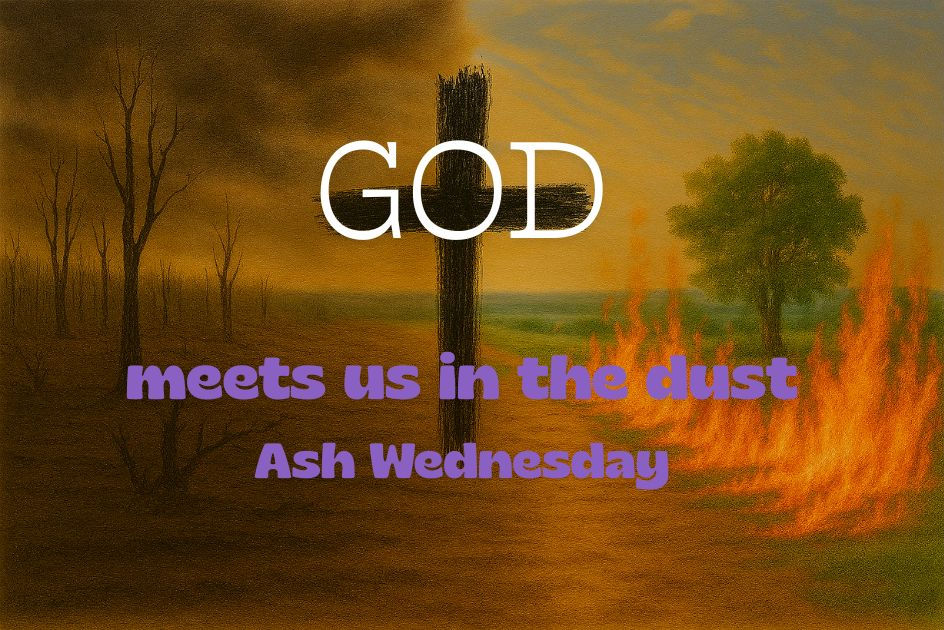
Introduction — The Cross We Wear Today
Today we carry a mark that’s hard to miss—a dark cross, right on our forehead, where everyone else can see it before we can. It tells the truth about us: our limits, our humanity, our belonging to God. And into that truth, we hear these rich scriptures from Joel, the psalmist, Jesus, and Paul. Each one urges us to listen, to pause, to reflect, and to return to God with all our hearts.
Contexts of the Readings
Joel 2:1–2, 12–17
Joel speaks to a community shaken by crisis, calling them to return to God with sincerity, not performance. God is not threatening them; God is inviting them back into life.
Psalm 51:1–17
The psalmist is painfully honest about failure and longing for a clean heart. God asks for truth in the inward being, not sacrifices or show.
Matthew 6:1–6, 16–21
Jesus speaks to people who have turned spiritual practices into performances. He invites them back to a quiet and personal relationship with God—one rooted in trust, not display.
2 Corinthians 5:20b–6:10
Paul speaks to a community struggling with hardship and mixed loyalties, urging them to be reconciled to God now, not later. God meets them in weakness and calls them into a new way of living.
My Pivot to Joel 2:3
Now, there’s a verse we didn’t hear today, Joel 2:3. It’s one the lectionary skips, but I think it’s worth holding as we enter Lent. Joel describes two places: in front of the people is something like the garden of Eden, and behind them is a desolate wilderness. If we skip that verse, we skip the tension we actually live in—the struggle between what drains us and what gives life, between what has been and what could be.
And honestly, that “in-between space” is exactly what Lent offers us. It’s where we listen, pause, reflect, and make decisions for the forty days ahead—decisions that lead us toward resurrection.
Today I invite you to focus on this “in-between space” from Joel, because it may speak to us in our own contexts, in our shared community, even in our nation.
Joel 2:3
“A fire devours before them, and behind them flame blazes up. Like the Garden of Eden is the land before them, and behind them a desolate wilderness. Nothing at all ever escapes them.”
Joel describes two landscapes side by side.
In front of the people is something like the garden of Eden: it offers them life, possibility, renewal.
Behind them is a desolate wilderness: it reminds them of places that feel empty, worn out, or uncertain.
And here we are on Ash Wednesday, with this cross on our forehead, God meets us in the dust, right between those two places.
Questions for Reflection
What emotions rise within us?
What might stop us from moving forward—or discourage us?
What might give us reason to move forward—or leave us no choice?
(Notes: Joel’s point is that no one can escape the moment when God calls them back.)
Let’s think about our own context, our personal life, our community, or our world:
Where do you see something that looks like wilderness?
And where do you see signs of Eden, even small ones?
Who is there for you and with you, or who can be there for you?
(Pause. Reflect back one or two themes shared.)
Our Shared Theology — God Meets Us in the Dust
After sharing: we believe in a God who meets us right where we are. Not after we fix ourselves, not after the wilderness disappears, but right in the dust.
When you imagine God meeting us in the dust of our real lives,
what truth about God becomes clearer?
And what truth about us becomes clearer?
(Pause. Name one shared theological thread.)
Decisions Shaped by Theology — Turning Toward Life
The people in Joel’s time, the psalmist, Jesus’ listeners, Paul’s communities—they all had to decide how to live differently because of who God is and who they are. And so do we.
What small action, in our shared life or in the world around us, might move us one step out of wilderness and one step toward Eden?
And how might we encourage each other as God's people who are trying to choose life together?
(Pause. Affirm what is shared.)
Transition to Good News
Together, we’ve named so much wisdom, and all of it leans toward the good news we carry into Lent. And I hope you’ve felt—like I have—that shaping these reflections together is a gift from the One we belong to. When I was talking with my colleague and peer‑coaching partner, Pr. Louisa, about how I hoped to preach today, she reminded me of something simple and true: when we begin worship, God speaks first; we answer back; and then we speak to each other. And honestly, that’s exactly what just happened here.
Prayer and Blessing — Gathering Our Words
Let us gather all these words—God’s words and our reflections—and offer them in prayer.
Holy God,
You have heard the places we name as wilderness and the places we glimpse as Eden. You have heard the truths we believe about you, and the hopes we carry for how we might live. Take all of this and breathe your Spirit into it.
Shape us as people who know we are dust, and who know we are loved. And as we walk these forty days toward resurrection, bless us with courage, compassion, and renewed hearts.
Amen.


Comments